Market & Comparables (detail)
The model is established, profitable, and well documented across operators. The relevant question is not whether nature-tourism-funds-conservation works, but how each operator is set up, whether it is profitable, and where AWAKEN sits. The recurring finding: the operators with the clearest conservation mission are the most profitable and durable.
Benchmark table
| Lodge | Region | $/person-night | Business model |
|---|---|---|---|
| Explorama / Ceiba Tops | Loreto | 198–355 | For-profit lodges + affiliated research/education centre (ACTS) and university partnerships; tourism funds the canopy walkway and research infrastructure |
| Tahuayo Lodge | Loreto | 248–298 | Single for-profit lodge inside a 420k-ha reserve it helped create and co-manages; in-house CONCYTEC research centre; sold direct to a high-repeat US market |
| Treehouse Lodge | Loreto | 267–320 | Boutique eco-luxury for-profit lodge; direct booking + travel trade |
| Inkaterra Hacienda Concepción | Madre de Dios | 284–408 | For-profit hotel + nonprofit science arm (Inkaterra Asociación) self-funded by ecotourism |
| Inkaterra Reserva Amazónica | Madre de Dios | 342–403 | Same two-arm model (for-profit hotels + ITA nonprofit, 4,100+ studies); scaled with IDB Invest debt |
| Refugio Amazonas | Madre de Dios | 355–407 | For-profit ecotourism; tourism funds research; community joint venture at its sister lodge (Posada Amazonas) |
| Tambopata Research Center | Madre de Dios | 483–515 | Lodge = research station (symbiosis): tourist surplus cross-subsidizes science; ~$30k/yr to the macaw project |
| Singita (luxury-conservation) | Africa | 2,455–3,525 | Ultra-luxury lodges fund a dedicated conservation foundation/trust (Grumeti Fund) via guest donations + philanthropy |
How the category looks
These are the lodges above, in their own marketing imagery. The point is simple: in build quality, setting and atmosphere, AWAKEN sits comfortably in the same visual class — at a fraction of their nightly rate today, and at a distress entry price.
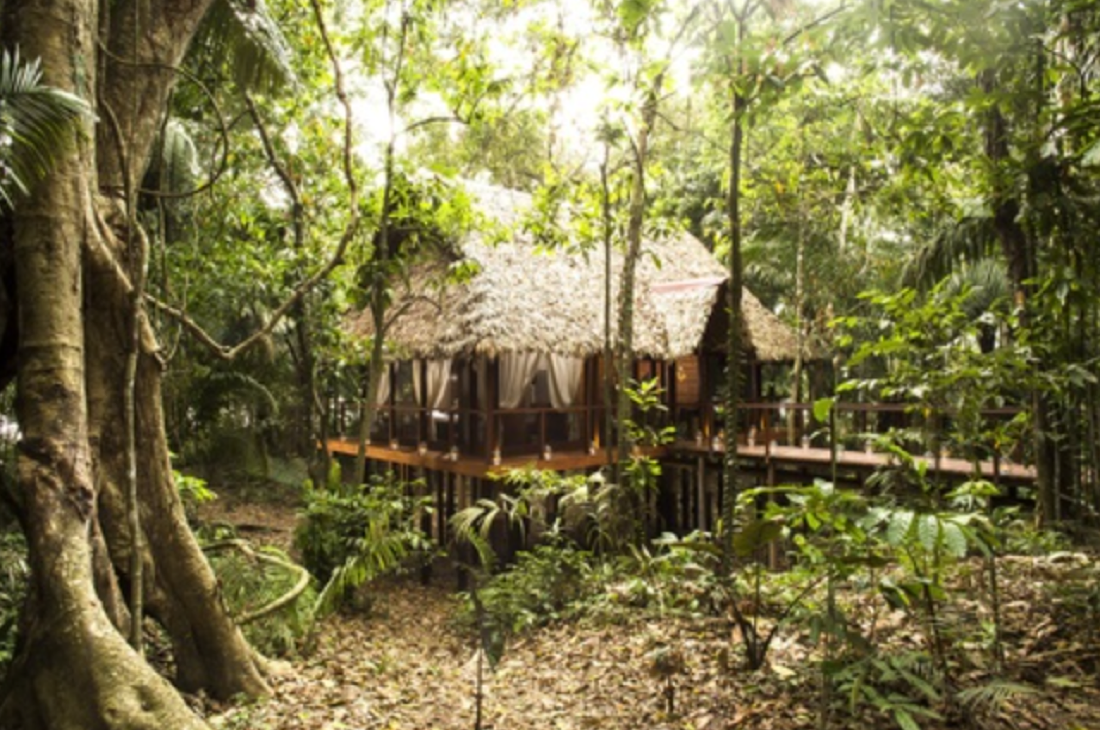
Inkaterra Reserva Amazónica · Madre de Dios
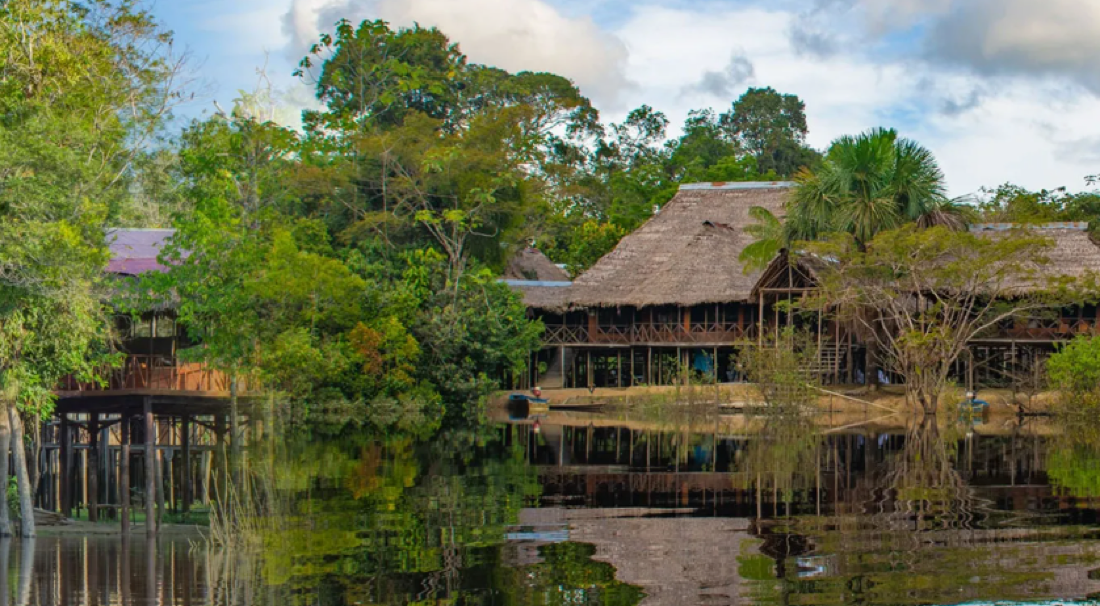
Tahuayo Lodge · Loreto
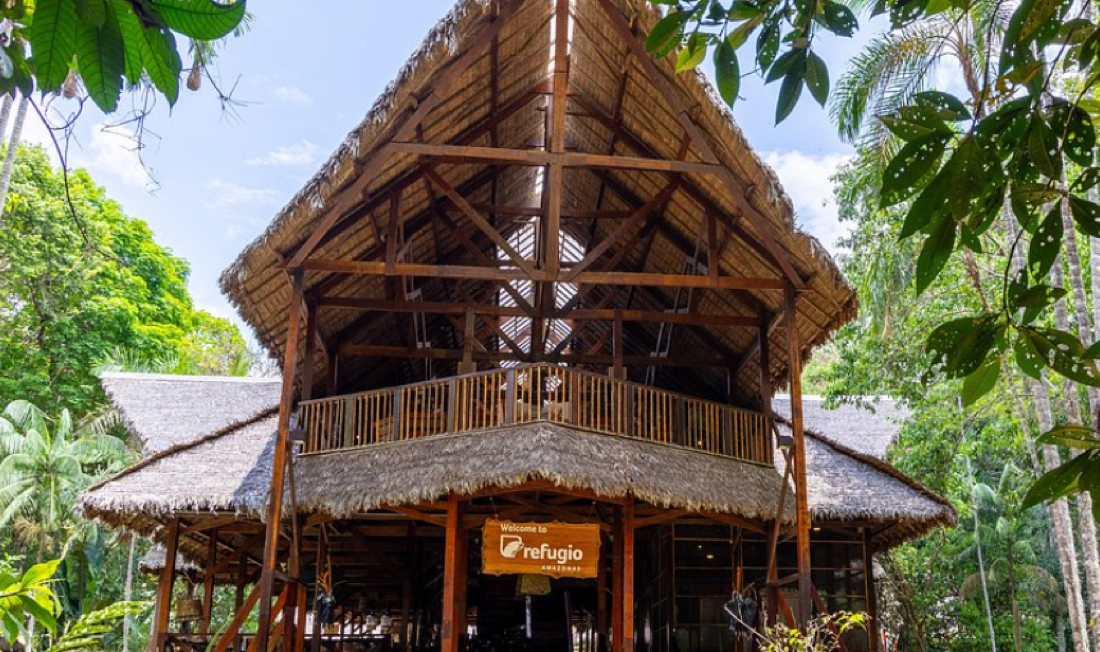
Refugio Amazonas · Madre de Dios
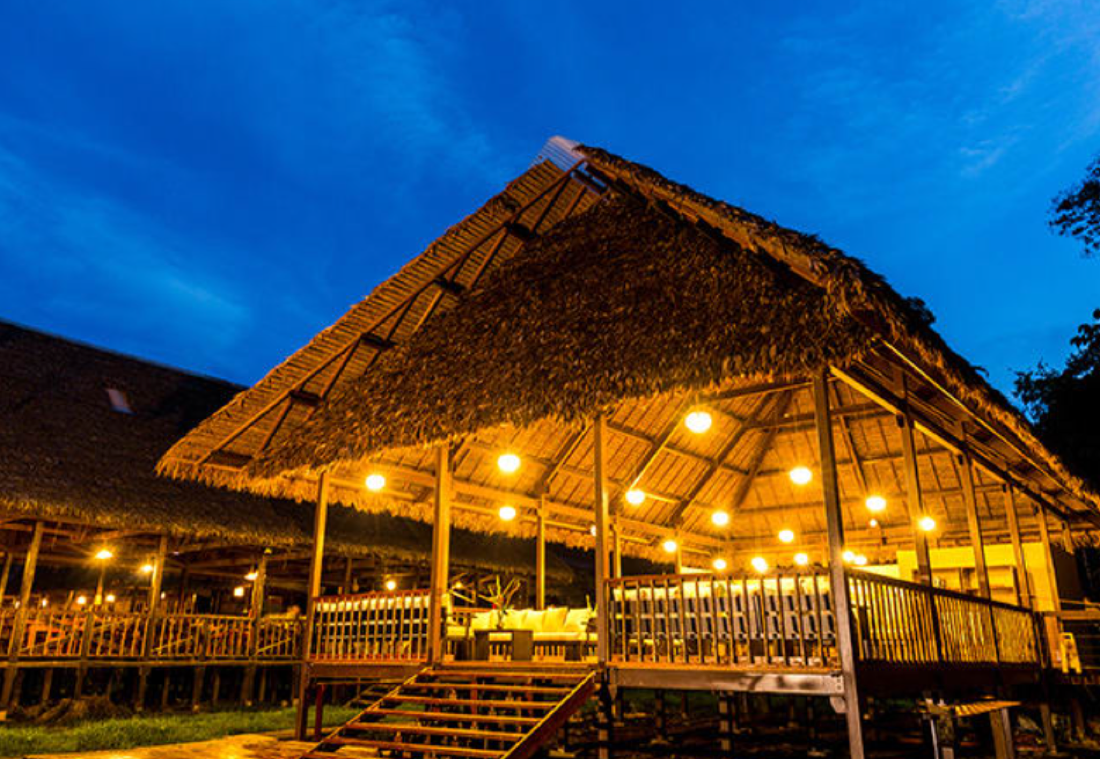
Tambopata Research Center · Madre de Dios
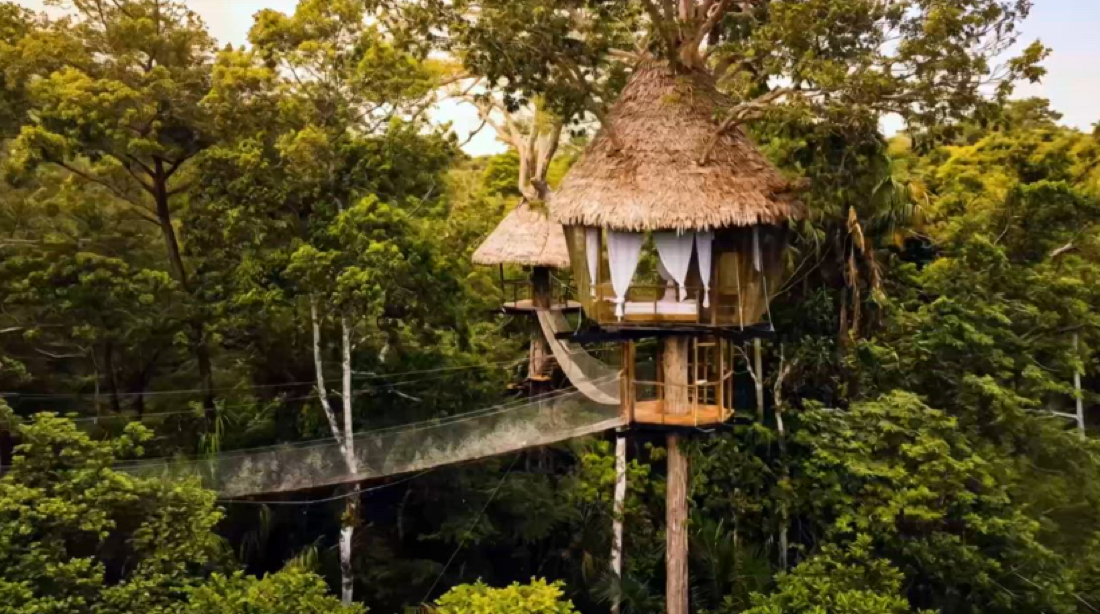
Treehouse Lodge · Loreto
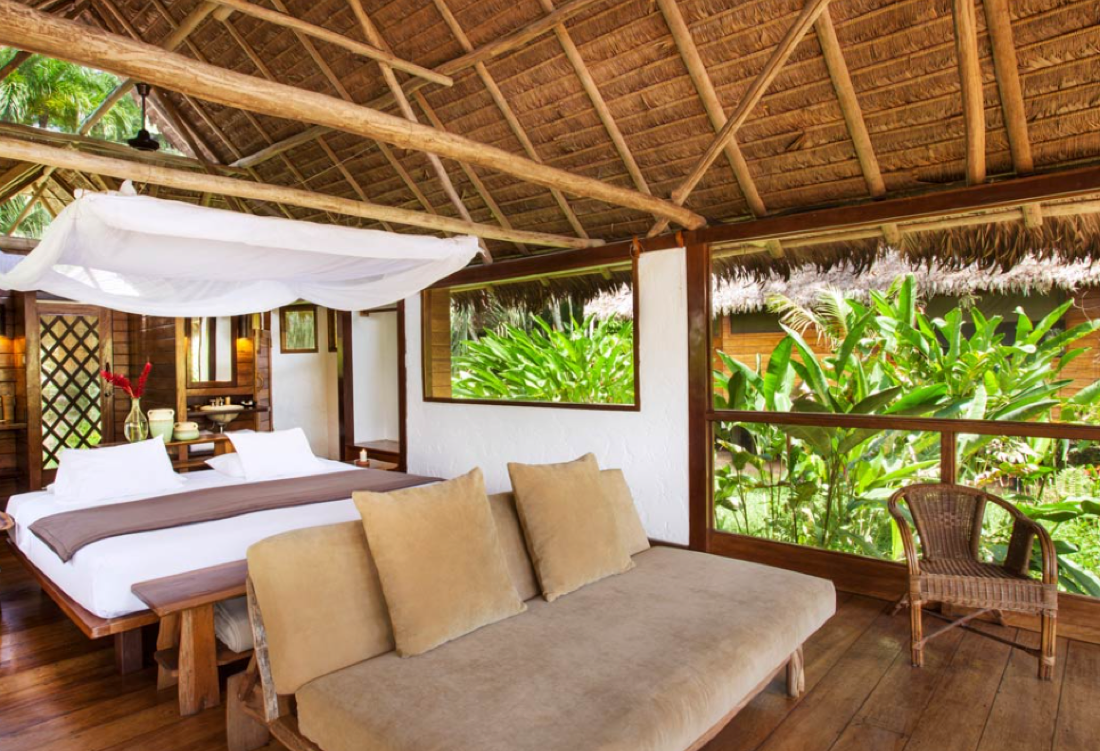
Inkaterra Reserva Amazónica · interior
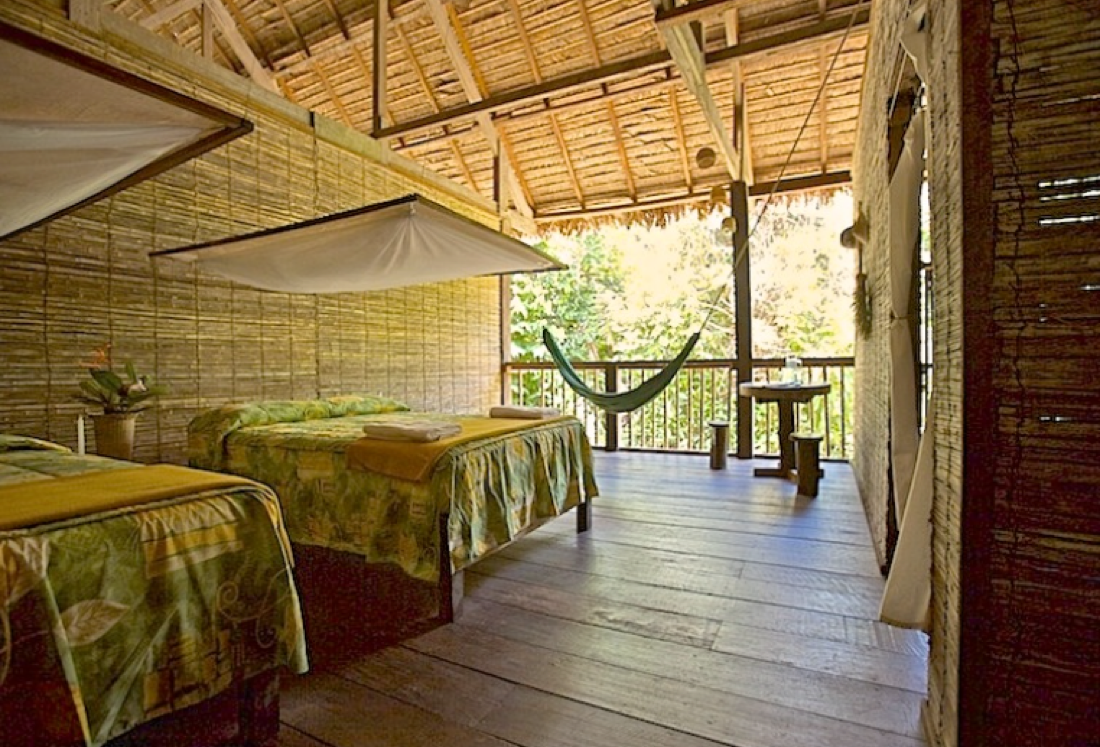
Refugio Amazonas · interior
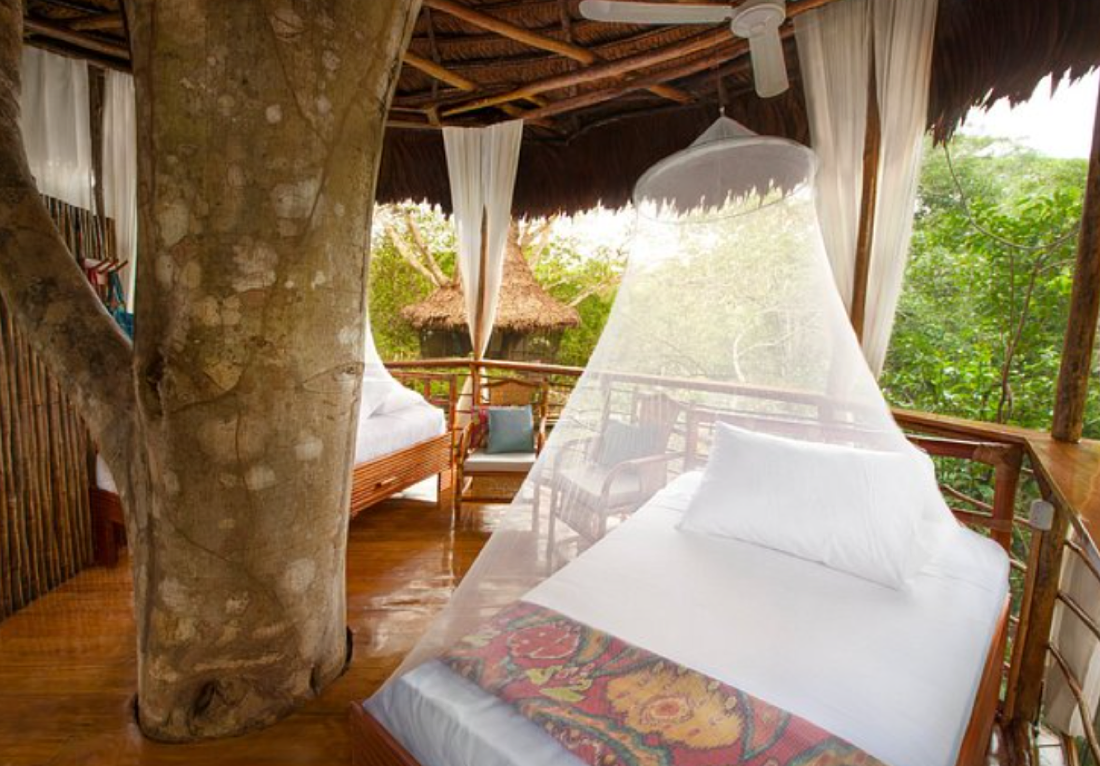
Treehouse Lodge · interior
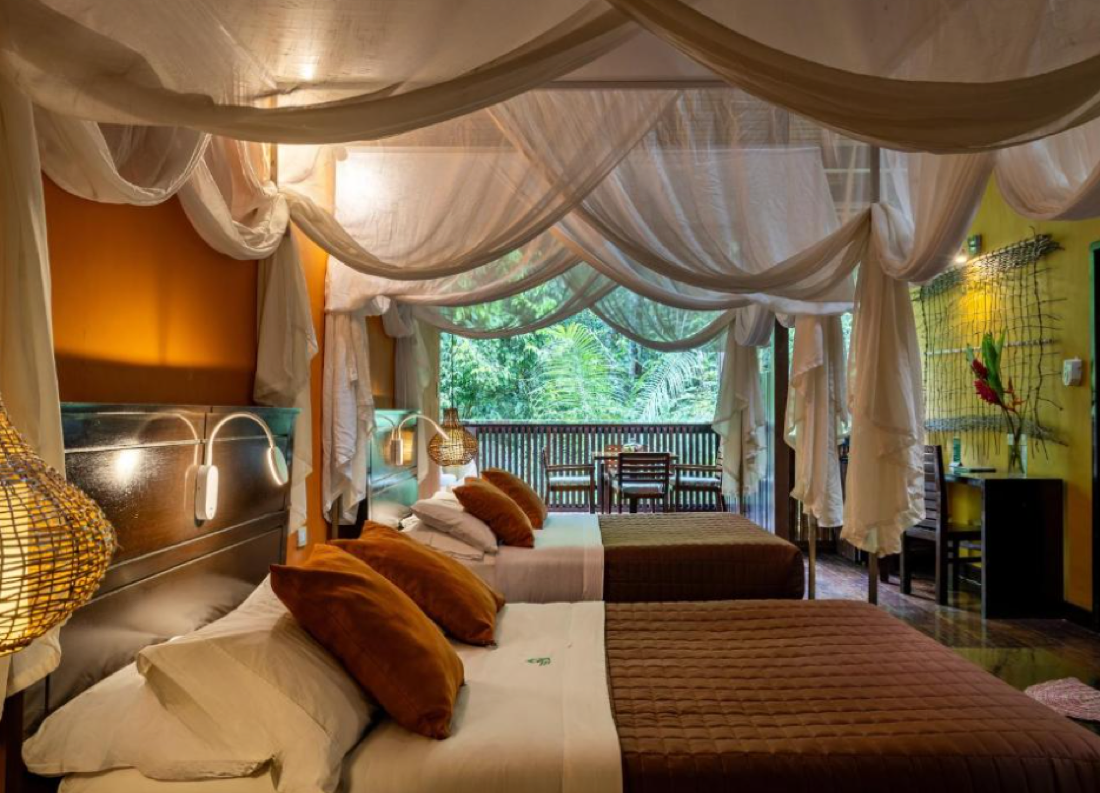
Tambopata Research Center · interior
Images are each operator's own promotional photography, shown for category comparison.
Success cases
- Tahuayo Lodge / Amazonia Expeditions (Loreto, closest analogue). Sole permitted lodge inside the roughly 420,000-hectare Tamshiyacu-Tahuayo conservation area, co-managing the reserve it helped create, with a CONCYTEC-registered research center and a 1,000-acre primate research grid. Sold largely direct to a high-repeat US market; decades of continuous operation on research and exclusivity.
- Lapa Rios / Cayuga Collection (Costa Rica). A thirty-year demonstration that premium hospitality pays for conservation: a 1,000-acre reserve under a conservation easement since 1993, a per-guest conservation fee funding rangers and education, on 100% renewable energy.
- Inkaterra and Inkaterra Asociación (Peru, the national benchmark). Seven hotels and a non-profit science arm self-funded by ecotourism since 1978, over 4,100 studies, partnerships with National Geographic and the Smithsonian, and a $17M IDB Invest facility to scale.
- Tambopata Research Center / Rainforest Expeditions (Peru). Designed in 1989 to be both a research base and a tourist destination — uniquely successful and financially sustainable — where tourist surpluses cross-subsidize science and the company contributes over $30,000 a year to its macaw project.
- Singita and andBeyond (luxury-conservation, the ceiling). Singita funds a 100-year conservation vision through dedicated trusts (the Grumeti Fund) with 24/7 anti-poaching, on rates of $2,455–3,525 per person per night; andBeyond runs the Africa Foundation and a multi-operator conservation coalition.
What this means for AWAKEN
The Sanctuary is positioned exactly where the model is proven and profitable, in an underserved region, at an entry price set by distress, with a clear path — reserve + CONCYTEC-recognized research function + per-guest conservation fee — to the same defensible identity that makes these operators profitable. AWAKEN adopts the most investor-legible elements directly: a transparent per-guest conservation fee earmarked for the reserve and research (as at Lapa Rios), and a recognized research function (as at Tahuayo), building on collaboration with UNAP and IIAP.
Confidential.